

I thought for quite a while about what my first blog post should be about… There are so many things that I could say about these majestic creatures. So, I figured I would start at the point which I found myself at, early last year, when I wanted to know more about greyhounds.
I have decided to explain and “debunk” some common myths, mysteries and misconceptions about these sweet dogs, alongside my own experiences. Therefore, hopefully if you are considering getting one of these beloved noodle horses yourself, then you will be persuaded! Or, if you are just browsing this post to satisfy your general thirst for knowledge, you will feel well and truly fulfilled. So, here we go… (and please be nice as you read – this is my first ever blog post, okay!
1. Greyhounds need lots of exercise.
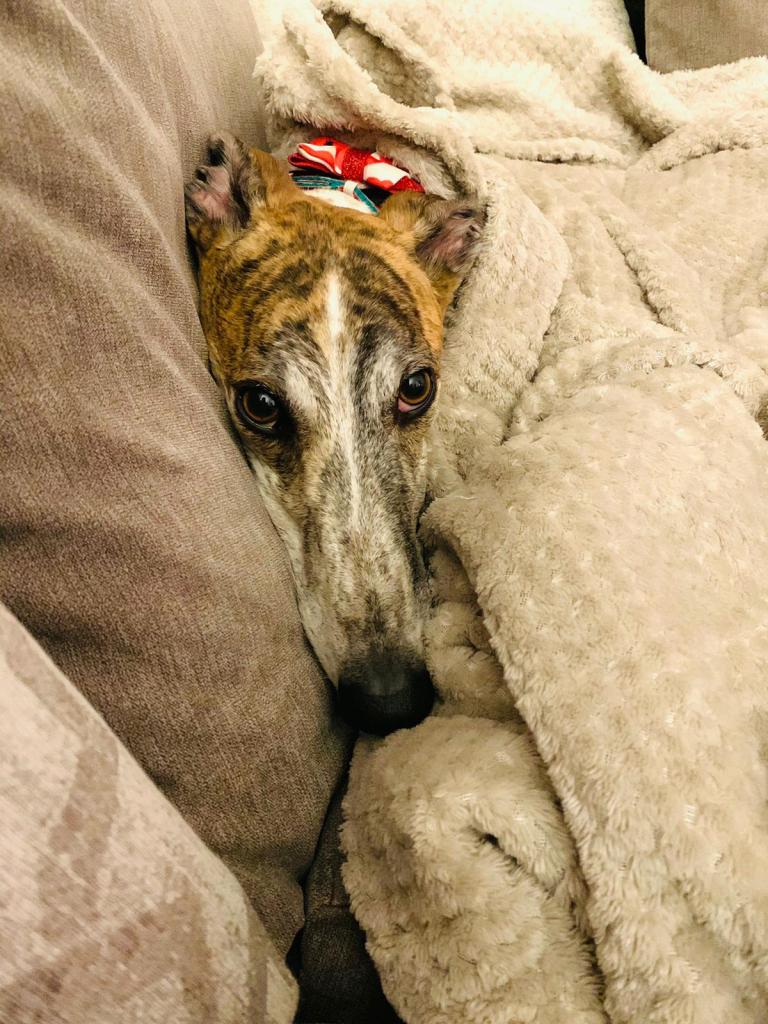
Okay, so this first concept is totally understandable and something that you feel should go without saying. These powerful, super-fast racing dogs must OBVIOUSLY require unlimited amounts of exercise – the type that you feel in your thighs for days afterwards… Well, actually, that is incorrect. Greyhounds are in fact incredibly lazy animals; by lazy, I mean to the point that there have been times when I am surprised Niko has not developed bed sores from the amount of time he has spent snoozing on our sofa! The idea that greyhounds require hours upon hours of strenuous exercise is untrue. If Niko could choose, other than his occasional mad five minutes of toy play, he would plant himself on our bed – in various positions, my favourite being with his legs right up in the air (roaching) – most likely forever. He just loves to relax! We, of course, walk him twice a day, but I do think I am more of a stickler for it than him. As a lover of the outdoors, I love nothing more than a crisp morning dog walk; however, at that time, Niko tends to prefer snuggling up with my husband in our warm bed. The general advice is that greyhounds get two daily walks of about 20-30 mins each. I also do take Niko on longer, more beautiful walks on the weekends. But, after an hour of walking, he is exhausted and will spend the rest of the day on his lovely, comfy memory foam bed. So, despite the fact these dogs can hit incredibly impressive running speeds, they have well and truly earned their nickname of “the 45mph couch potato”.
2. Greyhounds and small animals do not mix well.
What you have to remember is that most dogs have a chase instinct and will give it a go at chasing a cheeky squirrel or a brave bird that they spot in their garden. However, greyhounds have been encouraged (by us humans!) to effectively chase fast, furry lures. Also, the other significant difference between them and other dogs? They are more likely to actually catch what they are chasing. Now, I will be totally upfront with you – some greyhounds will never be particularly comfortable with small, furry creatures. Their prey drive and chase instinct will be far too strong and a particular greyhound might never be able to live with a small, fluffy dog or a bushy-tailed cat. What you must remember is that the majority of greyhounds, if they have lived in racing kennels, have never met another breed of dog before and have been actively encouraged to chase something small and furry. Yet, through positive introductions and training, many greyhounds can become comfortable around smaller animals without feeling that drive and I know many hounds who live happily with other dogs, cats and other small animals (not to mention one friend in particular who has two greyhounds, a chihuahua, 3 cats, 4 guinea pigs and 4 hamsters!). Our own boy, Niko, loves other breeds of dogs and seems fairly oblivious to everything – cats, squirrels, birds, you name it – so every hound is different and we should not make the damaging assumption that “greyhounds and small animals do not mix”.

3. Greyhounds are not a cuddly breed.
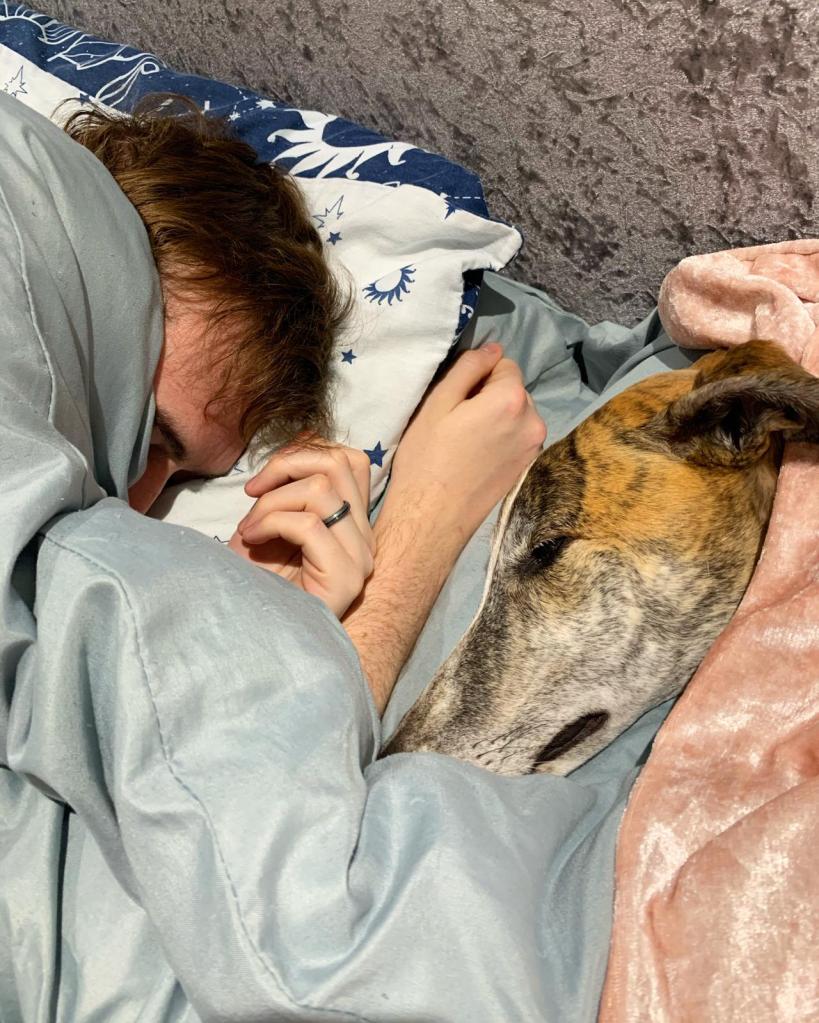
Out of every “myth”, this one is the one that makes me truly laugh out loud. For anyone who has met our boy Niko (or been lucky enough to have him pretty much sit on their lap!), he is hands-down the soppiest, silliest, cuddliest animal I have ever met. He craves being close to someone and adores nestling into my soft dressing gown on the sofa when we are having a cosy night in. Too often, I wake up in my bed with a snoot (nose) in my face or a paw tucking me in! And the best thing? Any visitors to our flat seem to find it hilarious. Of course, every dog is different, and some greyhounds may prefer fewer pats than the next (aren’t we humans the same?). Nonetheless, you see, there is this massive misconception out there that greyhounds are not cuddly. Perhaps this comes from the fact that they are “working” dogs and therefore we view them differently, but we must remember that they did not choose that path. So, why oh why would they not want snuggles just as much as the next pooch? And, from my own personal experiences, I have found that every foster greyhound that we have had the privilege to look after has also loved glorious amounts of affection. Sometimes, it can take a while to slowly build up their trust – how arrogant of us to assume that a timid rescue dog will suddenly jump into the arms of a complete stranger over night! However, with time, love and patience, we have found that the dogs in our care have indeed been “cuddly”. When you also consider the fact that we will never truly know their past and their experiences, I think the fact that this breed even has the ability to accept this affection, and often reciprocate, is absolutely magical.
4. Greyhounds are not a “cute” breed.
Okay, so I know what you are thinking: cute is subjective. Yes… and no. Has it never occurred to you that many of us have become part of a generation who view a “cute” dog as the tiniest, fluffiest creature that we can create, usually from ridiculous over-breeding and extreme measures to get the “perfect” dog? Subsequently, this particular dog is normally what we would now consider “cute”. Right, truthfully, greyhounds are not the tiniest, most dinky breed that will fit in a teacup, nor are they fluffy pooches with endless, gorgeous, flowing curls. But let us redefine “cute” for a moment… What if to be cute was to have deep, soulful eyes that spoke a thousand words with one look? If it was to mean having an air of adorable goofiness that could be rated something between mesmerising and hilarious (which included the frequent lolloping of a tongue when sleeping or tilting of the head when listening intently to your ramblings)? What if cute meant to have a favourite sleeping position that involved all four legs vertical, a soft pink tummy in the air and the detection of a relaxed smile, possibly for the first time in their lives? Finally, what if, within the realm of “cute” was the appreciation for a breed that will (usually) without any drama or reluctance, willingly wear any ludicrously adorable outfit desired by their owner and absolutely rock it like no other? Ultimately, my response to this myth – that greyhounds are not “cute” – well it is all down to perception. And perception without education is very usually… wrong.

5. Greyhounds wear muzzles because they are aggressive.
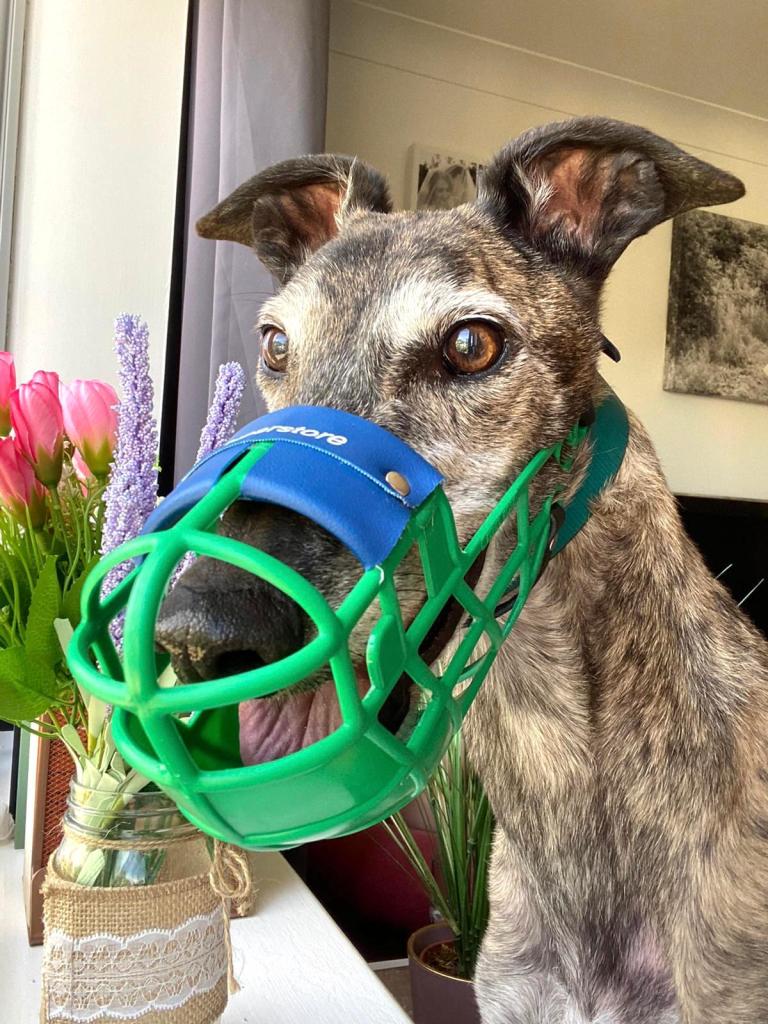
Let us clarify something straight away: greyhounds are not an aggressive breed. Anyone who knows greyhounds will tell you that they are very docile and shy away from dog confrontation. They do, however, have a prey instinct that we (yes, us humans, once again!) have encouraged over the centuries, through hunting and racing these dogs. Therefore, sometimes you will see a retired greyhound who is muzzled. PLEASE, and I repeat PLEASE, do not assume that because this dog is muzzled he is therefore aggressive. The dog could be muzzled for a number of reasons. It could be that the owner is being responsible as they are aware that their greyhound does still have a high prey drive to chase, and therefore they are minimising any risk with other off-lead dogs. It could be that the greyhound is new to the world outside the kennels – this, by the way, is how we operate with all of our foster dogs, no matter what their temperament may be, as I realise the monumental amount of responsibility that is placed upon me as a foster carer. It could even be that the dog is muzzled because it has had recent surgery and stitches, which can be common if the greyhound has recently been retired. Personally, I have had some infuriating experiences with other dog owners who have recognised that my foster dog is muzzled and have therefore already made a judgement on my poor hound. I even once felt compelled to stop and educate a particularly foolish woman, as she proceeded to tell her young daughter (before she even had the decency to pass us by) that my sweet, nervous foster dog “would bite her” and that’s why she wore a muzzle. Little did she know that our foster dog was absolutely terrified of the world and everything in it – other dogs, cars, people, the list went on – and therefore, by keeping the muzzle on, it meant that I was ensuring that she was completely covered in case a bouncy, hyper, off-lead dog was to approach and frighten her. (As a side-note, this bouncy-hyper-off-lead-dog thing is a very real, and very maddening, reality of going to a local park for walkies.) She was new to the real world, absolutely petrified and we were just being responsible foster carers. So, please, do not judge. Instead, ask and I know anyone in the greyhound community would gladly explain a bit more about our misunderstood greys.
6. Lastly, greyhounds are not a conventional breed to have as a pet.
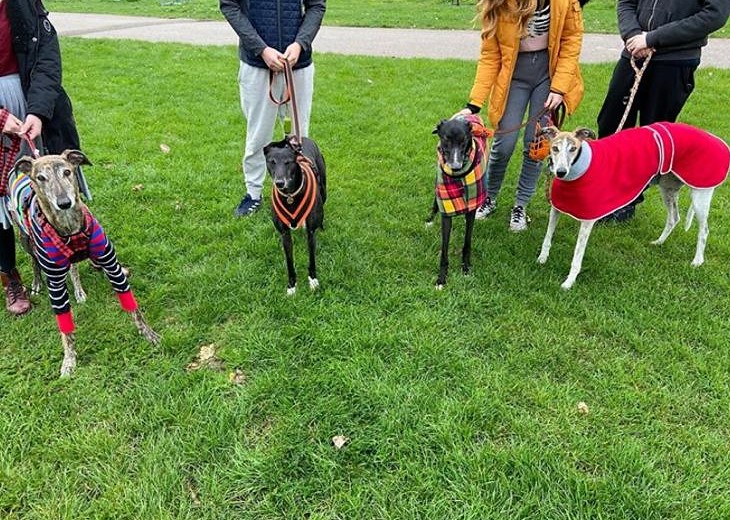
Admittedly, I do not think a retired greyhound is necessarily the first breed that will pop into a family’s head before embarking on the commitment of a dog. Why this is exactly, I could not say; potentially, we often think of them as racing dogs and cannot picture them in a home environment. However, I must strongly stress that once I entered this charming, passionate world of retired greyhounds, I knew I belonged. I guarantee that if you do a bit of searching, there will be a greyhound walking group somewhere near you, for example, that you never knew existed! The community that has been built around adopting these magnificent rescue dogs is absolutely remarkable, and the people have a kindness that is so incredibly warming. I now joke that I can always tell when someone is “a greyhound person”, because they are always accepting, soft-hearted and they hold a shared belief that every hound deserves a home. And, in a world with so much bad, this is something that I find so beautiful.
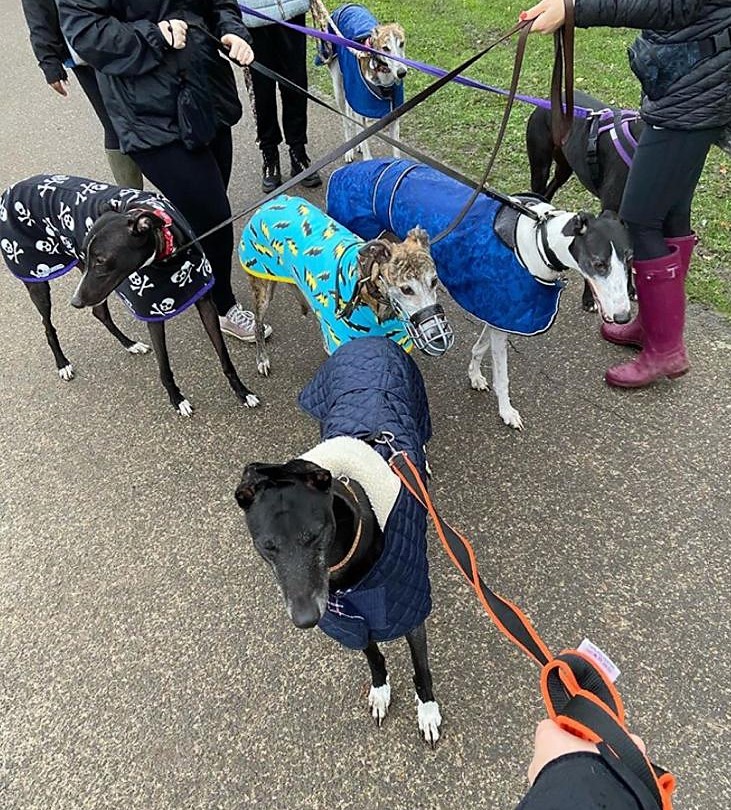
There you go. There is my first cacophony of energised points flowing from my head to page. Truly, I hope that I have (if I can be so bold to say) taught you something about some of the myths, mysteries and misconceptions surrounding this stunning breed. If you would like to, please feel free to send me a message on my contact page – I would love to hear your thoughts!
Until next time!
Love and snoot kisses,
Berry x

 Berry's Wonder Hounds
What a fantastic blog Aisling! This has definitely given me a good insight into the world of greyhounds! I think that you are doing a fantastic job of ensuring that these dogs end up with a lovely, happy home life!! Well done for taking the initiative of exploring greyhound life & how best to establish them into everyday life after being in a kennel!! Thank you for the lovely & informative blog X😁
LikeLiked by 1 person
I love this blog. We have had our Blake since September and he seems to be snapping at every dog even other greyhounds. He is short sighted so I don’t think he fully trusts other dogs as he cannot see then very well. I really hope with time he will understand that we can walk past without jumping and snapping. Any tips on this would be greatly appreciated x
LikeLiked by 1 person
Hi Jayne,
Yes, I have had that same experience with some of our lovely foster dogs! In the future, I hope to write about some of the ways that we tried to tackle this.
Thank you so much for your support and well done for adopting Blake!
LikeLike
Ash this is a fabulous account of our beautiful Greys. You’ve covered everything. Well done. The trouble is once you get one of these hounds you can’t get rid of the foster parents. 👍😍😍
LikeLiked by 1 person
I love this!!
LikeLiked by 1 person
Thank you – we hope people will find it helpful!
LikeLike