
Stressful? Anxiety-inducing? Enough to sometimes put you off leaving the house? – Yes… But, let’s look at the bigger picture when walking a reactive dog…
So, there is absolutely no denying that walking a dog with reactive tendencies can be extremely stressful. And, if you have adopted a beautiful greyhound, then there can be a chance that your hound may not be immediately comfortable with other dog breeds. As I have mentioned in previous blog posts, this is because usually greyhounds have never been exposed to other dog breeds until they leave their racing kennels, meaning that they need to be introduced to other dog breeds for the first time. When this happens, in some cases, the greyhound may react when they meet this “foreign” dog (a dog which is not another sighthound). In my opinion, this reaction usually comes from a mixture of confusion, curiosity and fear. Couple this with the concept of a high prey drive in some greyhounds, through years of racing, suddenly a gentle walk in the park can become a very hectic outing.
Many greyhounds (including our boy, Niko) have no issues with other breeds of dogs, enjoying their company and can happily share a home with them! He has many pooch pals of various different breeds and really enjoys walking with them.
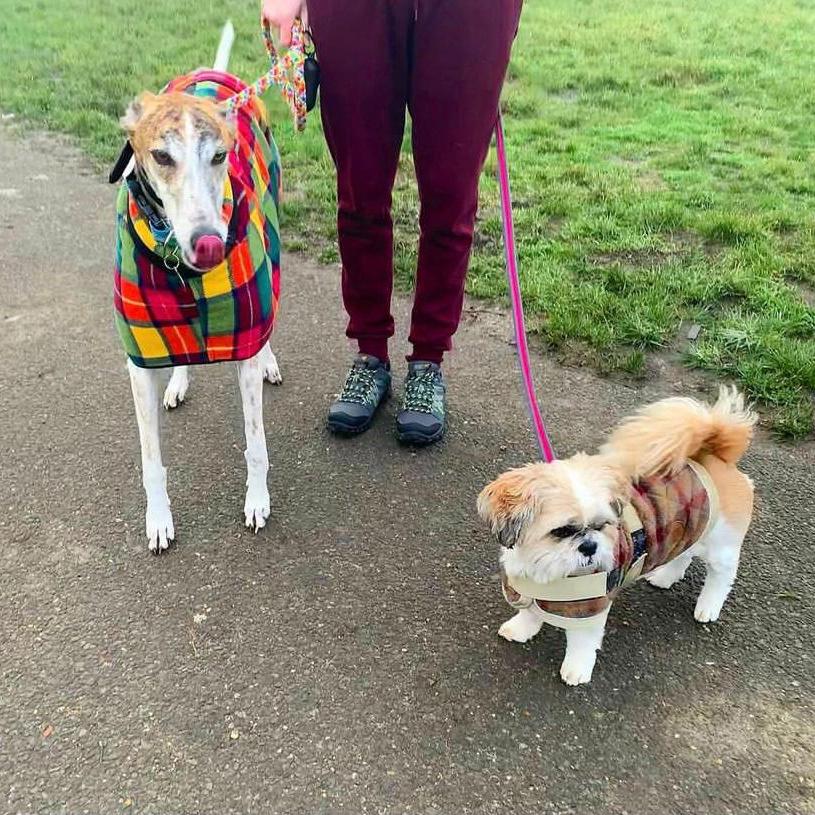
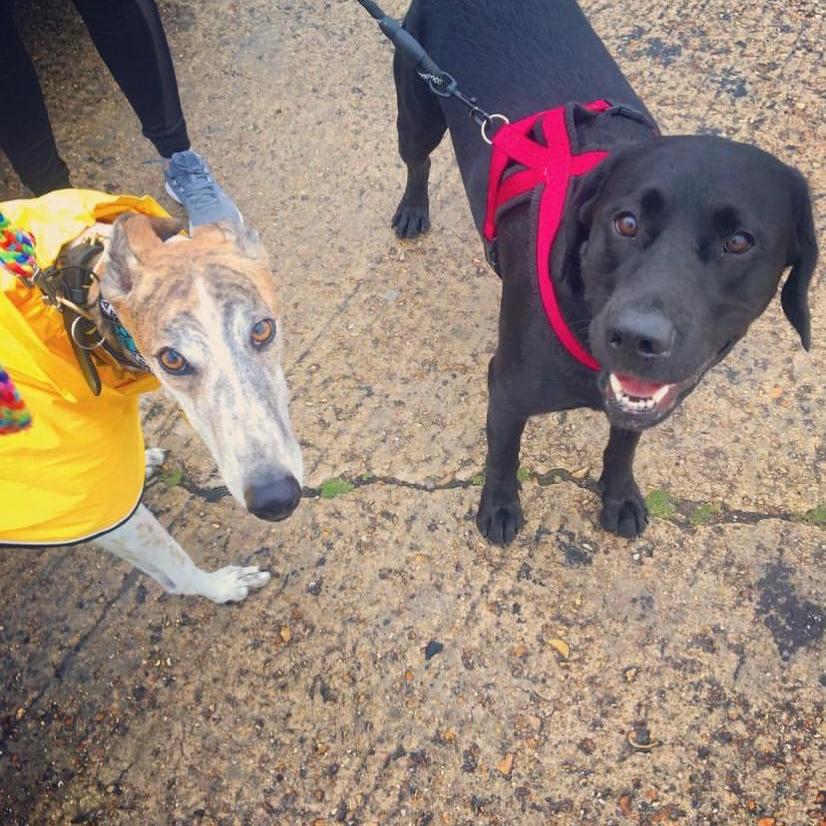
However, if your greyhound does have reactive tendencies or a high prey drive, it can mean that a serene, delightful walk can suddenly become a panic-stricken nightmare when another breed of dog comes into view… This could result in your docile, gorgeous grey suddenly seeming to transform into a bit of a lunatic, bouncing and lunging all over the place! As a greyhound fosterer, I have met a range of reactive greyhounds, as well as many snoots who are completely unfazed by other dogs. However, due to my experiences, I can definitely empathise with owners who do encounter reactive issues. Below are some examples of ways that I tried to combat these issues when fostering a reactive dog (always with the supportive help of our wonderful kennel group). By no means are these specialist recommendations, but they are my own personal experiences…
***
Two of our darling foster dogs, in particular, were highly reactive to other dog breeds – by “highly reactive”, I mean they would jump, lunge and effectively somersault to get closer to another breed of dog, utterly petrified of these unknown creatures. Our adoption kennels were fully aware of this reactivity and it was actually the reason why we decided to take on these specific snoots – it was a challenge! These two particular dogs would most likely never have been rehomed if someone didn’t take a chance on them… So, we did! We thought that, if we could work on their reactivity in a home setting, as well as learn more about all of their other wonderful quirks and qualities, then we could definitely find them a forever home. After all, there is a home for every hound!
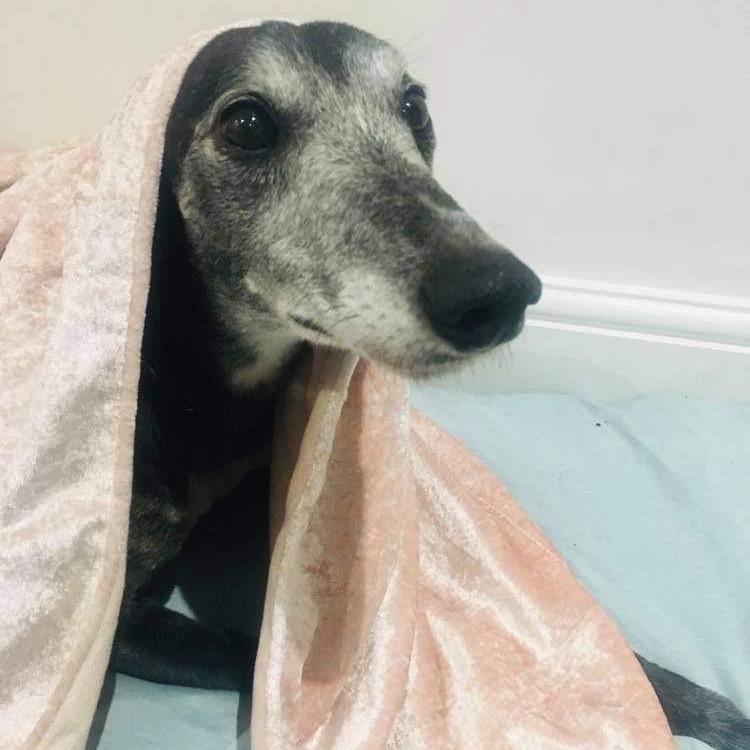
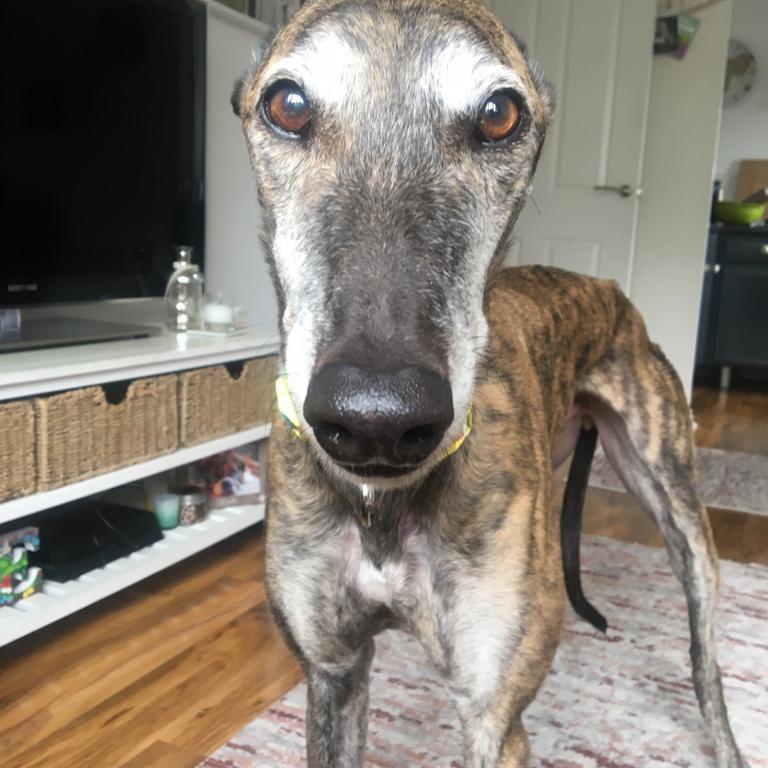
Now, with both of these gorgeous dogs (one a large male and one a smaller female), they could go from zero to one hundred once they spotted another dog breed. On my first walk with each of them, I was blown away by their sudden dynamic focus on another dog in the distance, the way that their hackles on their backs would rise to attention and the constant lunging that would begin towards the dog in question. I soon got over the embarrassment of other dog walkers (helpfully) crossing the road with their pooch or even giving me the odd dirty look. I would just repeat in my head the mantra that I was doing “a good thing” and I would feel extremely defensive of the poor greyhound, wishing that those casting judgement would kindly educate themselves and understand that this issue was not the dog’s fault. Furthermore, I would try my hardest not to become despondent at the massive difference between the chilled out, calm-natured pooches they were when at home lounging on our sofa, compared to the reactive animal that I would see before me on dog walks.


This was what used to make my heart ache – the idea that a dog with reactive tendencies could become labelled, and only ever seen as a “reactive dog”, when he or she would have so many other beautiful qualities. The beautiful, brindle male foster in our care over the summertime was wonderful with children, an absolute gentleman in our house and adored Niko; however, on walks, I soon found that people would recoil almost in terror at his reactivity towards other dogs. Additionally, the gorgeous girl who we had fostered a few months before also had reactive tendencies; yet at home she was the most relaxed, snuggly noodlehorse, who lapped up our attention and was thrilled when in the company of other sighthounds. Sadly, they had both been overlooked at the kennels by prospective adopters, largely because they were “reactive”, despite having so many other tremendous, loving qualities!
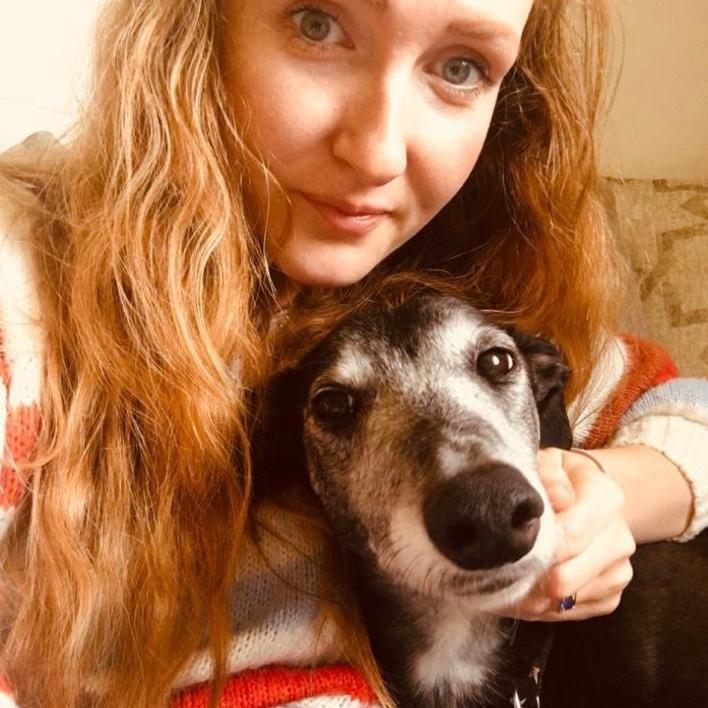

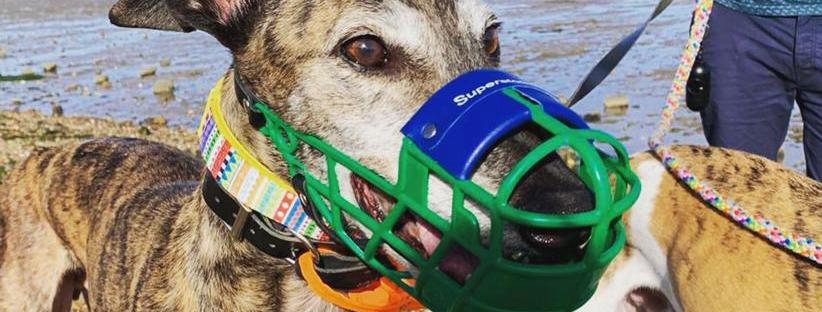
With both dogs, the main thing we learnt was not to give up. Yes – the walks were stressful. Yes – other dog walkers could be unkind and judgemental. But our duty was to the snoot in our care and we would not shy away from walking them in public because of their reactive tendencies. How would they ever improve if we hid them from the world? So, with the support of our fabulous kennel group, we ensured that we always felt fully in control when walking these two foster dogs. On walks, they would always be securely muzzled and we would triple check their specialist greyhound lead before we left our home, making sure it was tight enough – this was very important as you may think a lead is on securely, until your dog begins to bounce all over the place. Many reactive dogs (not only greyhounds) have been known to slip their lead! Furthermore, the lead was always provided by the kennels and would be a leather greyhound lead, which is thicker around the neck to accommodate the greyhound’s small head and reduce the chances of them slipping out of it. With our large male foster, over time we realised that an additional harness gave us more control over him and also appeared to make him feel more secure on walks.
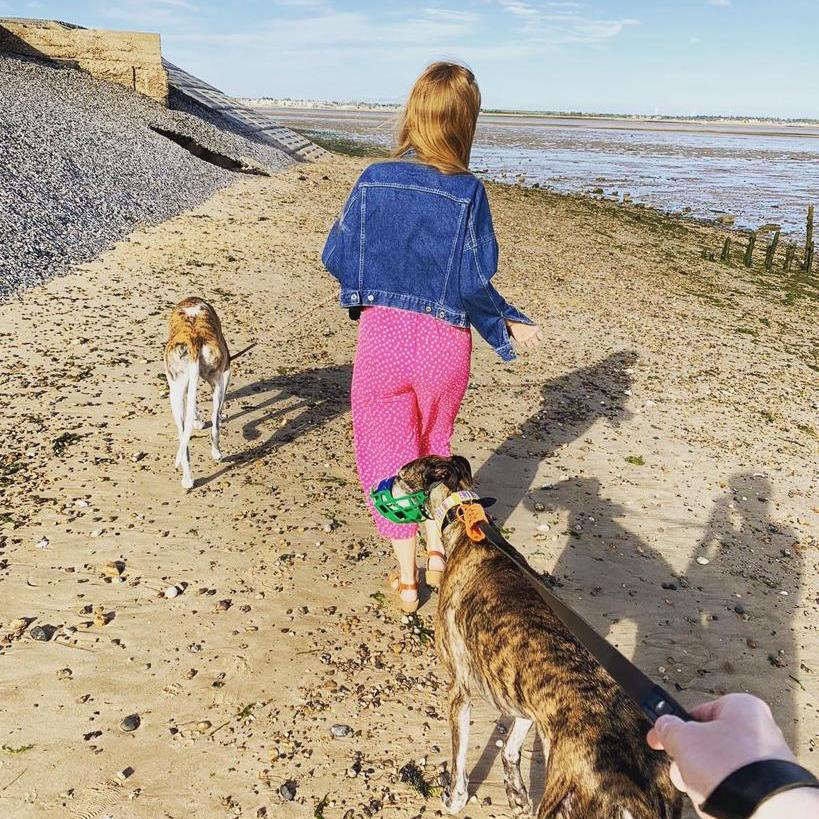

While walking, we would always be vigilant for other dog breeds approaching. We would not take these particular foster dogs to our local busy dog park, purely because the stress put upon them was simply not fair. Our local dog park is unfortunately rife with off-lead dogs (who rarely have appropriate recall!), so we would largely stick to walking these foster dogs on the road to begin with. When we would see another dog in the distance, we would cross over the road if possible and attempt to distract our dog with a calm voice – this meant that the dog was still being exposed to another dog breed, but not at an uncomfortably close distance. Once these dogs inevitably noticed the other dog breed, they would usually begin to react – pulling towards the dog in question or even jumping. At all times, I would have them on a shorter, controlled lead and would absolutely not stop. I would always, always continue walking, calmly reassuring the dog with my voice. Once we had passed the dog in question, I would encourage our foster dog not to look back at it and would praise him or her softly. The key that I learnt was for ME to remain calm. Initially, I am fully self-aware that I did not keep calm when walking these foster dogs. I knew that initially I would start to panic when I saw another dog on the horizon and I have learnt since that this anxiety will transfer on to the dog that you are walking, thus making the situation incredibly worse!
Also, we are very lucky, as Niko has such a calm temperament and we would utilise this: we would ensure that our reactive foster dog was always walking closely next to him on walks, so that he or she felt safe and would also recognise Niko’s example around other dog breeds. We have always found that the influence of a calming second dog would reassure the foster dog and so, if your greyhound has reactive tendencies and you know another greyhound owner, I would definitely recommend going for walks together.
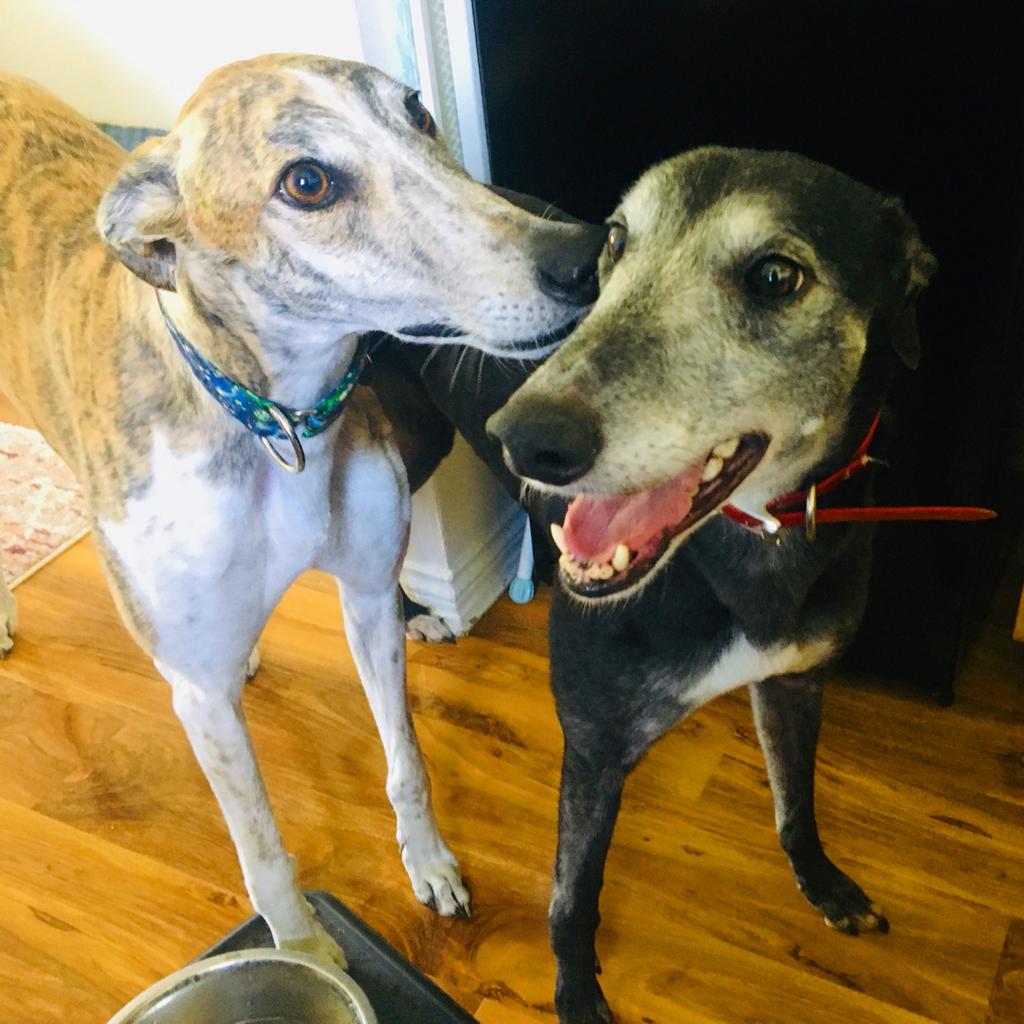
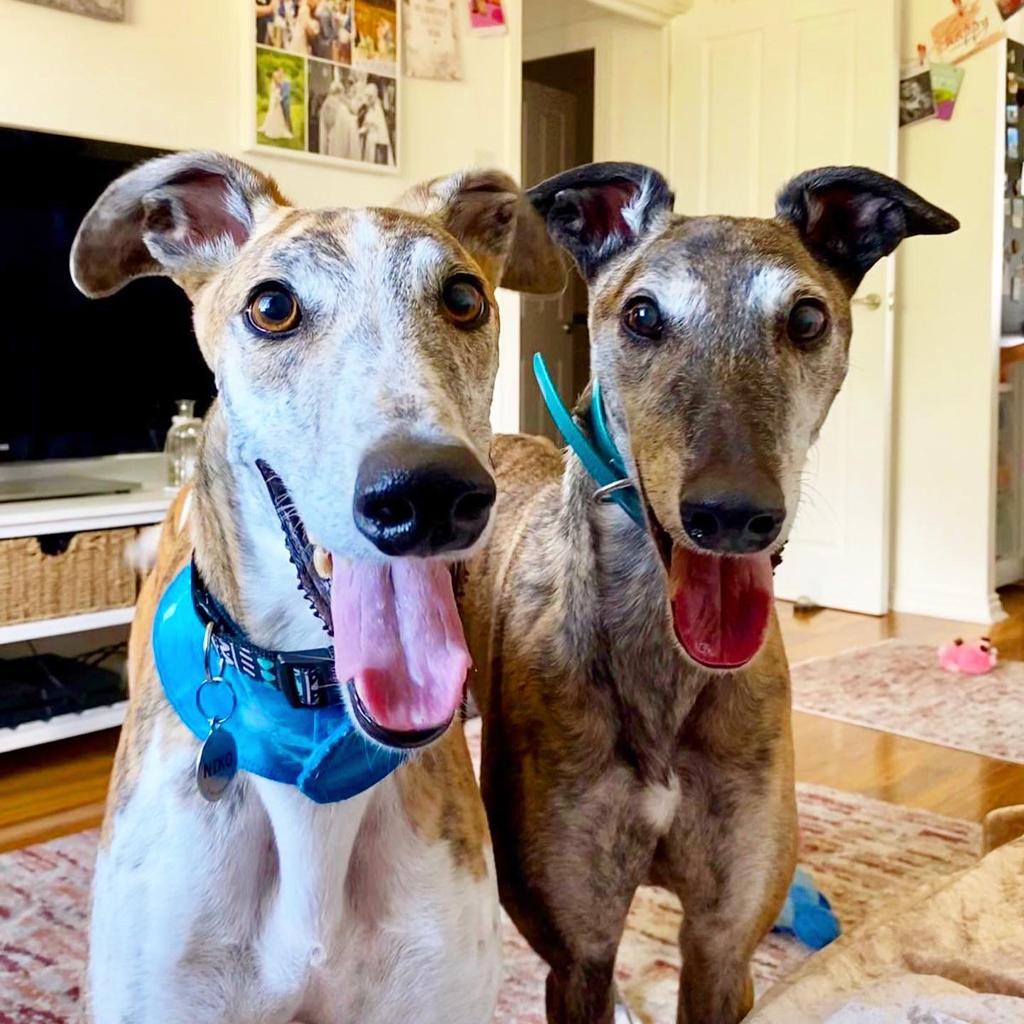
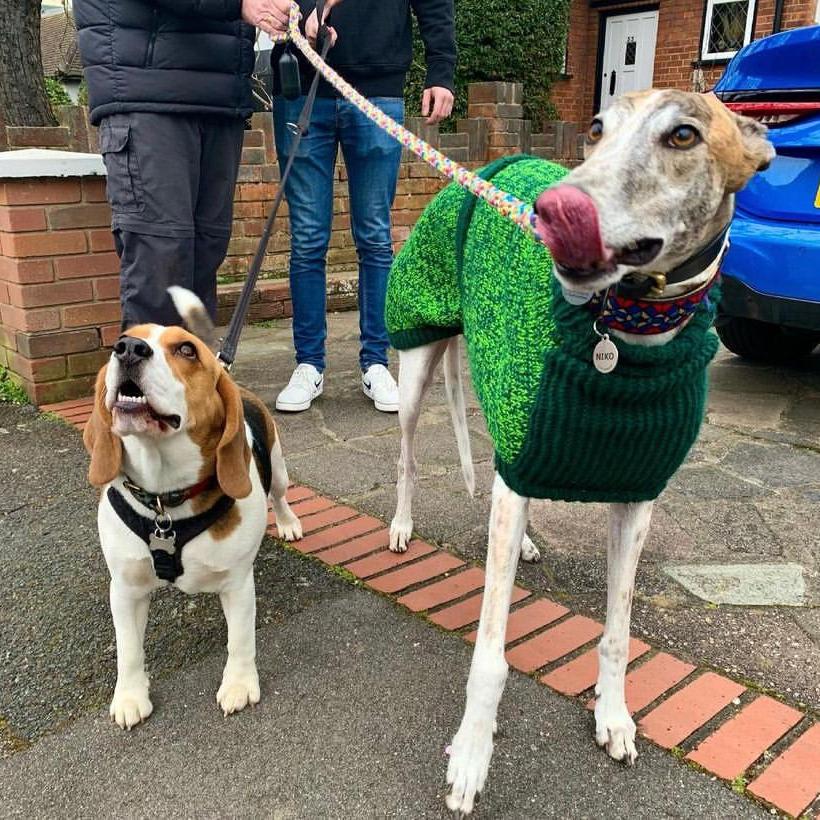
Once we had built some exposure with other dog breeds, we moved to the next step with our fosters – going for a walk with a dog that wasn’t a sighthound (AKA Bertie the Beagle). Now, my parents’ lovable, fearless beagle was too much for the female foster dog. When she met him in closer quarters, with both of them on-lead and her muzzled, it clearly caused her an enormous deal of stress. However, with the male foster, he reacted a great deal at first but, after beginning to walk alongside Bertie, with myself and Niko in between, he soon began to stop reacting. By the end of the walk, he was ignoring him, plodding along as if there had never been an issue. A mixture of me remaining completely in control of him, as well as remaining calm, meant that a situation that was once highly stressful for him eventually plateaued into a minor experience. Was he still muzzled? Of course. Was he right next to Bertie? No. Would I have trusted him to have been off-lead with Bertie? Absolutely not. But this was a massively huge step forward and one in the right direction!

Both of these foster dogs are now in the forever homes which we found for them and their adopters were fully aware of their behaviour towards other breeds, as well as the steps which we had already taken to work on this. Our lovely lady greyhound lives in the countryside and has actually inspired her humans to adopt two more greyhounds, so she is constantly in her happy place – that is with other sighthounds! She can still be fairly reactive towards other breeds, particularly as she exhibited such a high prey drive; however, it is rare for her to meet many other dogs on her rural walks and therefore this has not been a problem for her or her humans. With our gentleman foster, he also now lives in a fairly rural area and has even become walking friends with other local dogs. He still requires a harness, lead and muzzle on walks; however, his owner has worked really hard with him on his exposure to other dog breeds and he has improved vastly. Furthermore, his vet has since explained that his reactive tendencies are very clearly anxiety-related and therefore he has been put on a very low dose of canine anxiety medication, which has worked wonders for him on walks.
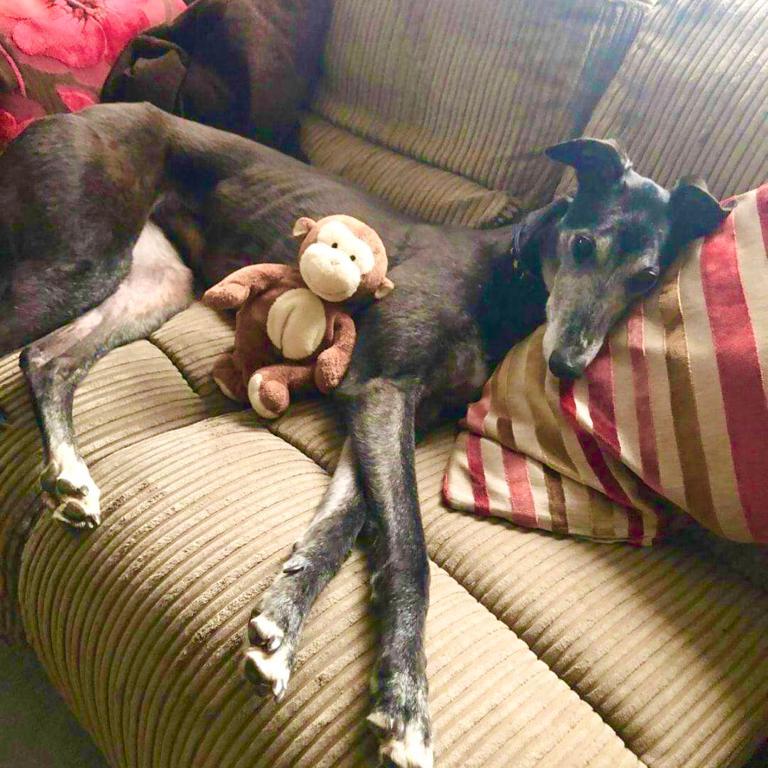
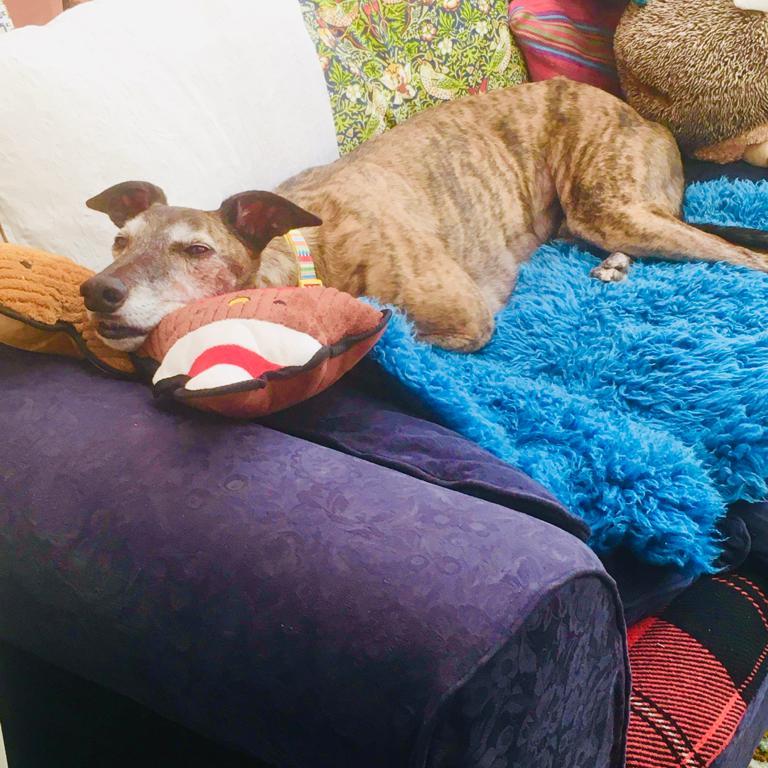
These two foster dogs touched my heart in a very particular way – they made me see the world through their eyes and appreciate how scary and daunting life must be when all you have ever known is life with other creatures who are exactly and only like you. Not only have they never experienced traffic, stairs, televisions, mirrors, etc. – they haven’t experienced any other beings other than humans and greyhounds. What a new, terrifying world they emerge into! They are deserving of time, patience, kind owners and the right home setting, to make them feel comfortable at their own pace.
So, next time you see someone walking their dog, be it a greyhound or another dog breed, and it is reacting… please show some kindness, not judgement. You don’t know the full story. It is a humble lesson that I have indeed now truly learnt.
Until next time…
Love and snoot kisses,
Berry x

 Berry's Wonder Hounds
This is so true. Buddy is reactive to most dogs, including other sight hounds, but it is part of who he is and we deal with it. We choose not to muzzle him because he is more reactive with a muzzle on, and with the muzzle he would be unable to defend himself if another dog set about him – but we wear a yellow flag saying that he needs space and we warn other owners that he might snap if their dog approaches. It’s then up to them. He’s been doing so well at becoming more sociable over the three years that we’ve had him, and although we’ve had a little setback in his progression recently we can identify some of his triggers and can further warn people off. But we wouldn’t swap him for anything!
LikeLiked by 1 person
Thank you so much for getting in touch and sharing your experiences with Buddy. I really wish that other dog walkers would sometimes consider a little bit more how overwhelming it can be for some dogs in particular circumstances. Thank you for working with him and seeing him for everything else that he is – you sound like an awesome snoot mumma!
LikeLiked by 1 person
What a fantastic & interesting insight into greyhounds, thank you for sharing Aisling. You have done a brilliant job with helping lots of other greyhounds. Thank you for the time & effort in helping these snoots. X🦮🐕💕
LikeLiked by 1 person
Thank you so much for your support and taking the time to read this post. I think it is so important for people to consider what life is like from these dogs’ point of view, especially when they have only ever known a kennel life. X
LikeLike
Fantastic blog for new owners very reassuring. Ash you should consider contacting Horse and Hound magazine and offer to write for them, give them access to your blog. X
LikeLiked by 1 person
Thank you so much for your kind words! I’m so glad that you think this would be reassuring to new owners. Thank you so much for your suggestion – that’s very flattering! X
LikeLike